Guide
Instant Pot Cooking Times Chart
This page contains affiliate links – if you buy through them we may earn a commission, at no extra cost to you. The recommendations are our own assessment. As an Amazon Associate we earn from qualifying purchases.
The Instant Pot cooks food fast by trapping steam and raising the boiling point, so a pot roast that would simmer all afternoon on the stove turns fork-tender in about an hour. The trade-off is that cook times are short and unforgiving, and every food has its own sweet spot. This master chart lists high-pressure times for the foods people ask about most, along with whether to finish with a natural or quick pressure release.
Two rules keep your results consistent. First, the cook time does not start until the pot reaches full pressure, which usually adds 5 to 15 minutes of preheating. Second, the release method matters as much as the minutes: a natural release (NR) lets pressure drop on its own and keeps meat and grains moist, while a quick release (QR) vents steam right away to stop delicate foods like vegetables from overcooking.
Master Instant Pot pressure cooking chart
| Food | High-Pressure Time | Release Method | Safe Temp and Notes |
|---|---|---|---|
| White rice, long grain | 3 to 4 minutes | Natural 10 minutes | Use a 1:1 rice-to-water ratio; fluff after resting |
| Brown rice | 22 to 24 minutes | Natural 10 minutes | Use about 1.25 cups water per cup of rice |
| Dried beans (black, pinto), unsoaked | 25 to 30 minutes | Natural 15+ minutes | 1 lb per 6 cups water; add 1 tbsp oil to cut foam |
| Chicken breast, boneless | 8 to 10 minutes | Natural 5 minutes | Cook to 165F (74C) |
| Chicken thighs, bone-in | 12 to 15 minutes | Natural 10 minutes | Safe at 165F (74C); most tender near 175F (79C) |
| Whole chicken, about 4 lb | 24 to 28 minutes | Natural 15 minutes | About 6 minutes per lb; 165F (74C) in the thickest part |
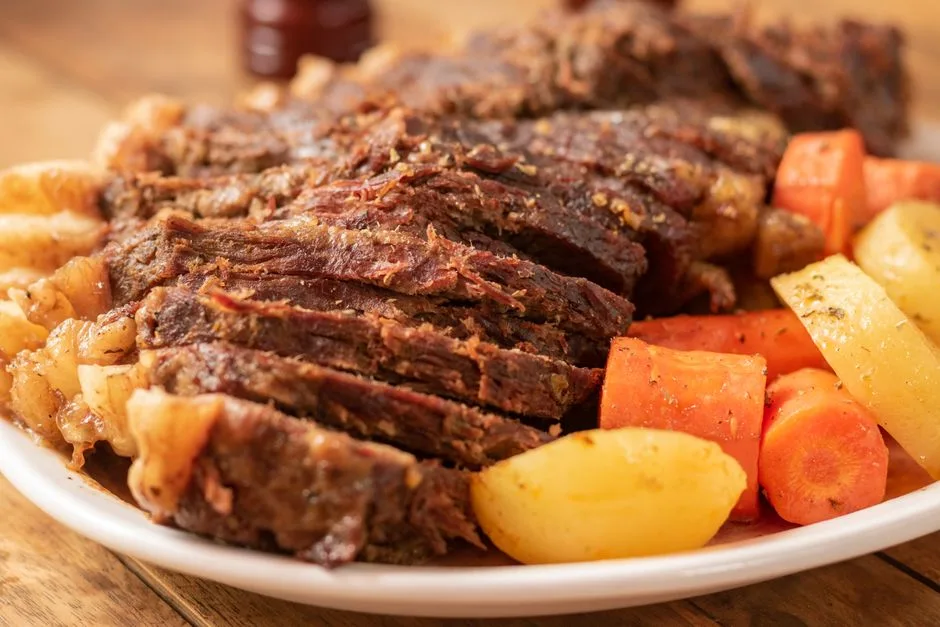
| Pot roast (chuck), 2-inch chunks | 60 to 75 minutes | Natural 15 minutes | Beef safe at 145F (63C) with a 3-minute rest; shreddable near 200F (93C) |
| Potatoes, cubed 1-inch | 8 to 10 minutes | Quick | Great for mash or potato salad |
| Potatoes, whole small | 12 to 15 minutes | Quick | Pierce each one first |
| Eggs, hard cooked | 5 minutes | Natural 5 min, then 5-min ice bath | The 5-5-5 method for easy peeling |
How to use this chart
- Find your food and set the high-pressure time listed.
- Add 1 to 2 cups of thin liquid and seal the lid, with the valve set to Sealing.
- Let the pot come to pressure; only then does the timer count down.
- Release pressure using the method shown, then check meat with an instant-read thermometer.
Tips for perfect results
- Always include at least 1 cup of thin liquid so the pot can build steam; thick sauces alone will trigger a burn warning.
- Cut roasts into similar-size chunks so they cook evenly, and confirm doneness by internal temperature, not time alone.
- Use a natural release for foamy or starchy foods like beans, grains, and large cuts of meat to prevent spattering at the valve.
- Above 2,000 feet, add about 5 percent more cook time for every additional 1,000 feet of elevation.
- Cook frozen meat only on the pressure-cook setting, never the slow-cook function, since the USDA warns that slow cooking from frozen keeps food in the 40F to 140F (4C to 60C) danger zone too long. Add roughly 50 percent more time and always verify poultry reaches 165F (74C).
Frequently asked questions
When does the cook timer actually start?
The timer starts only after the Instant Pot reaches full pressure, not the moment you press start. Building pressure typically takes 5 to 15 minutes depending on how full and how cold the pot is, so plan for that extra time.
What is the difference between natural and quick release?
A natural release (NR) lets the pressure fall on its own over 10 to 20 minutes, which keeps meat, beans, and grains moist and prevents liquids from foaming out the valve. A quick release (QR) opens the valve to vent steam immediately and is best for vegetables and other foods you do not want to overcook.
Why is my Instant Pot chicken rubbery?
Rubbery chicken is almost always overcooked. Use the times in the chart, finish with a short natural release, and pull the meat as soon as it reaches 165F (74C) in the thickest part. Boneless breasts especially dry out quickly past that point.
Do I need to adjust times for high altitude?
Yes. Above about 2,000 feet, add roughly 5 percent more cook time for each additional 1,000 feet of elevation, since water boils at a lower temperature. Meat still needs to hit the same USDA-safe internal temperature.
Can I cook frozen meat safely?
Yes, but only on the pressure-cook setting, not the Instant Pot's slow-cook function. Pressure cooking heats food fast enough to move it through the 40F to 140F (4C to 60C) danger zone quickly, while slow cooking from frozen would leave it there too long. Cook straight from frozen, add about 50 percent more time, and never rely on the clock alone: verify that poultry reaches 165F (74C) and other meats hit their safe temperature before serving.
Related guides